I have recently worked with several visually creative people. They all created visually impressive content supported by text. Some were online content, and others were dual-purpose online and offline content in PDF format. They all had one thing in common.
Words were not their strong suit. That is not a problem, as there are many talented freelance content creators who could write the text for them. Unfortunately, none of the creatives thought of doing that. Instead, and working with a graphic designer, they ploughed ahead and created the content.
It was then that our creatives noticed a problem. Notwithstanding that they had reviewed their text, there were spelling and grammatical errors, and the text was poorly written. This detracted from the visual content, resulting in a poor user experience.
This is where I was brought in.
Lorem ipsum dolor sit amet
I improved the readability of the text and corrected the grammar and spelling mistakes in all but one case (more about that later). I worked collaboratively with the creatives and their respective graphic designers.
Since the 1500s, Lorem ipsum dolor sit amet has been used as dummy text to create the layout of a book. In the 1960s, Lorem ipsum was made popular by typeface manufacturer Letraset, who offered pages of Lorem ipsum as rub-down transfer sheets, widely used in the pre-computer era for layouts. This practice was adopted in the 1980s in Aldus Corporation’s Pagemaker software and brought Lorem ipsum into the digital printing age, but none of the graphic designers had done this. None of them had heard of Lorem ipsum dolor!
Most of the graphic designers happily substituted dummy text in their layout so that I could work on the real text. The result was that the text was more readable and free of grammatical and spelling errors.
A tried and tested process
Over centuries of experience, the publishing industry has developed and refined a process as relevant in the digital age as it was in the days of the quill pen. That is, all the text editing stages are completed before the manuscript is sent to the typesetter.
The copy editor’s work informs the book designer of the number of pages in the book, where pictures or illustrations are to go, and how the text fits in with or around them. Lorem ipsum dolor sit amet is often used to fine-tune the layout.
The proofreader makes a final edit of the ‘proofs’ the printer will use to ensure there are no grammatical or spelling mistakes.
Then, and only then, is the book printed.
Most, but not all
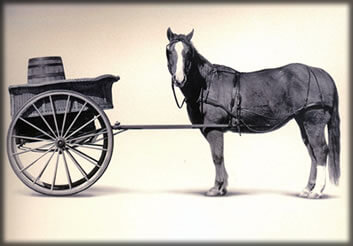
The advent of desktop publishing and self-publishing are welcome developments enabling many people to self-publish their work, but there is a negative side. The negative is that the several stages of editing the text before design are often omitted or, as in these cases, are an afterthought. The design cart is put before the editing horse. The results are evident in the negative comments about some self-published books, for example, on Amazon.
I said earlier that most creatives and graphic designers were happy to collaborate with me to achieve a superior-quality offering; one graphic designer, however, would not do so. Their design was immutable, including the text, notwithstanding that it contained spelling and grammatical errors.
As it was clear that I could not perform my role to a professional standard, I thanked the creative for their enquiry and declined the invitation to work with them on their project. What would you have done?