Here you will find articles and tips about proofreading, as well as commentary on related matters. I may, however, occasionally stray beyond this remit.
My aim is to be informative and help writers and others understand more about what proofreading involves and when they need the services of a proofreader.
Please feel free to leave a comment but be polite and respectful. Remember, what you put on the Internet stays on the Internet.
I have noticed in recent times that everything has become “a bunch” – a bunch of money, a bunch of ideas, a bunch of problems, a bunch of videos – even a bunch of people. In the main, the culprits seem to be Americans aged from teenagers to early middle age, but they are not the only nationality who seem to have stopped using collective nouns. This malaise has spread to other parts of the English speaking world.
Our common language is poorer for not using these venery terms, and begs the question: Are collective nouns taught in schools any more?
This article dips into the history of collective nouns and provides some entertaining examples of venery terms.
Unless you are a philologist, a student of medieval English etiquette (there must be Chair for such an obscure subject at an ancient English university), or a lexophile, without looking it up, you are unlikely to know what venery means in this context. In Middle English, venery meant hunting, and is derived from the Latin venari and the Old French venerie both of which mean ‘hunting’.1
What has hunting got to do with collective nouns? To answer that question, we have to go back to The Book of Saint Albans (originally The Boke of Seynt Albans), which was printed in 1486 and is attributed to Dame Julia Barnes, who is said to have been a Benedictine prioress of the Priory of St. Mary of Sopwell near St. Albans2 in Hertfordshire, England. The information in The Book of St Albans: Containing Treatises on Hawking, Hunting, Cote-Armour, Fishing, and Blasing of Arms, to give it its full title, served as a vocabulary guide for medieval gentlemen to help them use proper terminology during upper-class sports and dinner conversations – terminology that had existed long before the Book was written. It popularised 165 poetic and satirical collective nouns in a section called ‘The Compaynys of Beestys and Fowlys”.
If a medieval gentleman were to to go hunting, he needed to know whether the quarry he chased was a “flock” or a “skein” or a “herd” or a “sounder”. Should he “let fly a hawk” or “cast off” a falcon? He needed to know the names of the homes and lairs of various animals, what those animals looked like when they took flight, what their calls or songs sounded like, and the names of their young.3 The Book of St Albans provided him with this information.
I was taught collective nouns in primary school when I was about eight years old. Here are some examples of the collective nouns I recall being taught, many of which are from ‘The Compaynys of Beestys and Fowlys’:
A gaggle of geese – two or more geese that are not in flight
A skein of geese – geese in flight.
A bevy of girls
A rascal of boys
A drove of cows
A herd of deer
A murder of crows
A murmeration of starlings – one of nature’s great spectacles!
A parliament of owls
A constellation of stars
A stand of trees
A den of vipers (not to be confused with a “nest of vipers”, which is a figurative phrase that describes a group of dangerous, treacherous, or untrustworthy people).
A coven of witches
A bunch of grapes
A cluster of nuts
A fleet of ships
A swarm of bees
An army of ants
A hand of bananas (as you would buy them in a greengrocer’s shop)
A bunch of bananas (growing on the tree and comprising several hands)
A bunch of keys (on a keyring the collective noun is a ring of keys)
A barrel of monkeys
A pride of lions
a school of whales
The Compendium of Collective Nouns4 gives many more examples, some of which are familiar, such as a cache of ammunition. Others are less familiar, such as a kettle of buzzards, a hover of kestrels, or a mob of kangaroos.
Try these collective nouns:
A roll of coins
A wad of banknotes (banks often use the term ‘bundle’)
A cete of Badgers (a sett is where badgers live)
A mountain of problems
A train of (good) ideas
A miasma of bad ideas – I like a blunder of bad ideas
An ostentation of peacocks
A harem of peahens
A skirl of pipers
A skulk of thieves (in Nineteenth Century New England, the collective noun for thieves was a muzzle)
A dissimulation of birds
An unkindness of ravens
A host of sparrows
A circus of Puffins
A chime of wrens
A disputation of lawyers
A gaze of raccoons
An unction of undertakers
A charm of words
An amble of walkers
A congeries of wizards
Compared with these collective nouns and venery terms, using ‘a bunch’ as the collective noun for everything sounds so lame and deprives your writing and speech of colour and humour.
How about a scribble of writers? Or a Barger5 of bloggers?
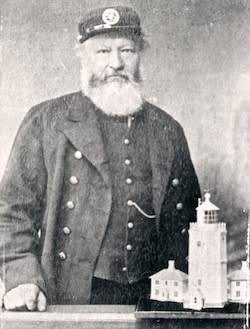
My favourite humorous collective noun is a plague of lighthouse keepers.6
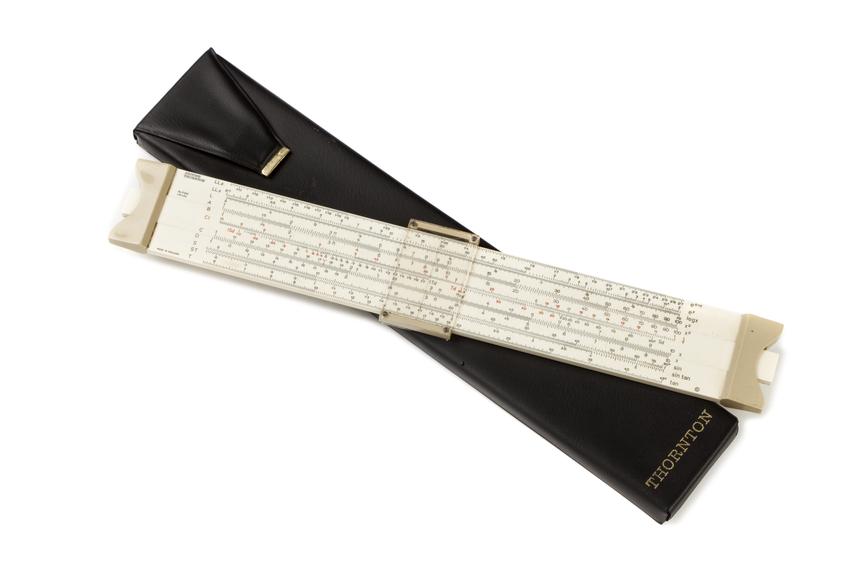
A younger family member saw the case containing the slide rule I have had since my school days. He asked what it was. His eyes widened as he took the slide rule out of its case. What is it? He asked.
“It’s a slide rule”, I replied. What is a slide rule? He asked.
I explained that it was an analogue computer accurate to three significant figures.
“Show me how it works”, he asked. So, I showed him some simple calculations using the slide rule. He wanted to know more than I remembered. “I will have to read the instructions”, I said. It was then I remembered I had lost them many years ago. “No problem”, I said. “I will get them off the Internet.” I actually got them from Amazon.1
Konshak’s book contains a facsimile of the instructions for my slide rule (Thornton model 271 pictured above). They were written in 1965. While reading the instructions and working through the examples, I couldn’t help noticing the em dash’s use and abuse, and other solecisms.
There are three types of dashes in British English:2
The hyphen. Hyphens make links. They form compound adjectives such as a three-year-old child, computer-based work, or short-term goals.
The en dash is longer than a hyphen, but shorter than an em dash. An unspaced en dash is often used to replace to in a range of dates or figures, for example, 1964–1971 or 75–86, but is optional. However, there is no dedicated en dash key on a UK computer keyboard, so one has to rely on shortcut.
The em dash is longer than the en dash and joins two words. For example, word—word. When used in pairs, em dashes can draw special attention to the phrase they surround. Its use is optional, although Oxford University Press favours using the em dash. UK typewriters and computer keyboards have no dedicated em dash key, which is why, except for Oxford University Press, British English rarely uses it.
In American English, the hyphen and en dash serve the same functions as they do in British English.
To summarise words, phrases, or clauses that summarise a previous list.
To set off a series as an appositive.
For a sentence interruption that adds to the meaning of the sentence but is not grammatically part of the sentence.
To show an unfinished statement.
However, its use is optional. Hemingway, for example, did not use em dashes, at least not in The Snows of Kilimanjaro.
I am not a fan of the em dash, although it has its place if used properly. Often, a pair of commas or a pair of brackets (parentheses) would do just as well. Cutts4 quotes from the Times style guide:
“Dashes are sloppy punctuation, ugly in narrow columns of newspaper type. They often indicate that a sentence is badly constructed and needs rewriting.”
I agree with that statement and extend it to all writing. However, there is another reason why I am not a fan of the em dash. That is, their frequent use in AI-generated content can result in human-created content sprinkled with em dashes being treated as AI slop.
Strunk and White (who appear not to recognise the en dash) advise using the (em) dash “only when a more common mark of punctuation seems inadequate”.
My bête noire is the em dash that does not join two words, for example, word — word.
Back to the slide rule instructions, which, as I say, were written in 1965. The instructions contain three pairs of em dashes that could, and in my view, should, have been replaced by pairs of commas. The most egregious solecism, however, was an em dash that did not join two words. A simple comma would have sufficed.
Strangely, there was no full stop at the end of any sentence save for one that ended ‘etc.’, where a full stop at the end of the sentence was not needed.
As an instruction manual, it achieved its goal of teaching me how to use the slide rule. Reading the instructions sixty-one years after they were written, I found their sloppy punctuation and badly constructed sentences had not aged well.
Those instructions are now a footnote in history. The invention of the first handheld electronic scientific calculator5 in 1972 sounded the death knell of the slide rule business worldwide, and by 1980 British Thornton, along with every other slide rule manufacturer, had ceased making slide rules.
When my young relative next visited me. I showed him how to use the slide rule. By then, though, his interest had waned. My explaining that the slide rule was invented in 1630 and used by scientists and engineers for nearly 450 years to design buildings, bridges, ships, and aircraft evoked little interest. That is, until I told him that NASA used slide rules to calculate the flight path of the Apollo spacecraft, as depicted in the 1995 movie Apollo 13,6 and that every Apollo spaceflight carried one to do fuel calculations as a backup to the onboard computer.7
We are bombarded daily with advertisements on the Internet and on TV for products that generate AI content, be that for business, personal, or academic use.
Artificial intelligence is everywhere in our daily lives. Applications range from chat bots doing preliminary customer service functions to medical diagnoses and everything in between.
So, is it acceptable to use AI-generated content in your writing? My view is a qualified yes. Let me give you a couple of examples of what I consider to be unacceptable use of AI-generated content before discussing its ethical use.
A few months ago, I, along with many others, received a series of promotional messages for an automated eBook writing service. I was intrigued, and so I delved deeper to see how it worked. The basis of the system was a series of prompts that told it what the subject matter of the book was. The system then scavenged non-copyright material from the Internet, which it collated and formatted into an eBook. The only thing the “author” needed to do was to have the front and back covers designed and uploaded to the system and, hey presto! your eBook was created. There was minimal “author” input into the process.
The creators of this system were at pains to point out that it would not generate Pulitzer Prize winning prose, only that the output would be “good enough” for platforms such as Amazon’s Kindle.
To me, that is not an acceptable use of AI-generated content because it removed any creative effort on the part of the “author”.
A more blatant unacceptable use of AI recently arrived in my inbox in the form of a request to quote for proofreading a scholastic article. My correspondent boasted that the article had been created by artificial intelligence and that he wanted a guarantee that the edited version would be deemed likely to be human-written. In other words, he wanted a guarantee that it would pass a “Turnitin” test.
I would point out that this example was not an isolated incident. I frequently receive such requests and only today I was offered $300 to provide a similar service. I decline all such offers of work. What would you do?
Ethical use of AI-generated content
I believe AI-generated content can be used ethically, even in academic writing.
All good writing, whatever the genre or purpose, starts with an idea that the author researches and refines. The author’s research notes are the basis of their first, rough, draft. I believe it is legitimate to use AI to help create that first draft.
Many author’s find that starting the first draft is the most difficult part of the writing process. Having artificial intelligence assist in creating the first rough draft could help some authors activate their creativity.
The advice given by many experienced authors about writing the first draft is simply to write and not be concerned about correct spellings or grammar. Artificial intelligence can assist with this phase of writing.
As the name suggests, the first draft is just your initial attempt.Of course, you will need to refine your draft including adding, deleting, and reorganizing sections, choosing the draft’s format and revising it if required. After several rounds of revisions, including grammar and spelling checks, and verifying the facts, your final draft will be unrecognizable from the first one. Artificial intelligence has played no part in the revision process that advances your original draft to the final version.
That does not mean that you cannot or should not use tools such as your word processor’s grammar and spell checker, Grammarly, or QuillBot to assist you to proofread each revision provided that, in the case of academic writing, you disclose that you have done so.
Many self-publishing authors undervalue their work. Before considering why that is, it is illuminating to see how freelance editors set their rates in comparison to average weekly earnings, and then apply that to valuing an author’s work.
Many self-publishing authors either do not understand the benefit of having their work professionally edited or consider it to be of little value. As an example of the latter, I was recently invited to submit a proposal to proofread a novel intended for self-publication, with the author offering $7 per hour. This may appear to be an extreme example, but it is not rare on platforms like Fiverr and Upwork.
Freelancers
Copy editing and proofreading are skills that must be learned and practised to gain the competency and experience needed to edit a broad range of documents in the five main dialects of English. Reference books and materials must also be purchased and kept up-to-date.
Most copy editors and proofreaders are freelance workers in business for themselves; that is, they are not salaried.
How do freelancers calculate their rates?
A freelancer’s rates reflect not only the value added to the author’s writing, but also all the costs of:
Holidays and sickness absence;
National Insurance (or equivalent payroll tax if applicable);
Pension provision;
Continuing professional development (CPD);
Office space and utility bills;
Reference books and materials;
Software and subscriptions;
Marketing;
Business equipment and supplies; and
A reasonable rate of pay.
This means that a freelancer’s rates are not directly comparable with employee remuneration.
Average weekly earnings
The average weekly earnings before taxes of a full-time worker (40 hours/week) in the UK in July 2026 were $944.07 ($23.60/hour), whereas in the USA, it was $1,251 ($31.27/hour).
Suggested minimum hourly rates
The UK’s Chartered Institute of Editing and Proofreading’s (CIEP) suggested minimum hourly rates for 2026 are:
Proofreading (line editing) – $43
Copy editing – $50
Substantial editing, rewriting, and development editing – $58
The rates were converted to US dollars at the time of writing.
The most up-to-date evidence of the rates charged by freelancers in the USA comes from the Editorial Freelancers Association (EFA). Based on its Nov 2025 to mid-Jan 2026 survey data, the suggested rates are:
Proofreading (line editing) – $50 to $70
Substantive editing – $65 to $80
Technical editing – $69 to $100
The CIEP and EFA point out that rates can be higher for experienced editors, specific genres, or urgent projects.
Comparing these suggested rates with the average weekly earnings shows that a freelancer needs to increase the average earnings per hour, as shown above, by approximately 55% to cover the cost of running their business and allow for taxes. That uplift could rise to as much as 70% to 75% for work obtained through freelance platforms such as Fiverr or Upwork. Many authors do not appreciate that freelancers incur these costs.
Freelancers often convert their hourly rate to a cost per word or per 1,000 words and may add a premium for urgent work. They may also give a fixed price for the job.
Why do some self-publishing authors undervalue their work?
Some authors write for recognition, some for credibility, while others write in the hope of making money from their work. Whatever the reason, writing incurs a cost: the lost opportunity to do something else. Instead of calculating the monetary value of their work, many self-publishing authors assign an emotional value to it.
The simplest way to calculate the value is to multiply the average hourly rate of pay applicable to the author’s location by the number of hours taken to research, write, and revise the piece of prose. The cost of research material, travelling expenses, and all other incidental costs must be added to this. To keep things simple, I will use the 55% enhancement freelancers need to cover the cost of running their business, but I will disregard the incidental expenses.
Let us say that a US-based author spends 144 hours researching, writing, and revising an original piece of prose. That is the approximate time, spread over two 9-day sessions, that it took Ray Bradbury to write the 46,118 words of Fahrenheit 451. The cost of doing so would be $6,980. Fahrenheit 451 has sold over 10 million copies.
Why then would authors not be willing to pay a reasonable rate to have the fruits of their labours copy edited and proofread by experienced editors? The reason is that many self-publishing authors do not cost their work, and consequently, they either do not know its value or they undervalue it.
The trend toward using AI-generated content exacerbates a situation where the “author” invests little physical, mental, and emotional effort in their manuscript. A recent correspondence thread on LinkedIn illustrates this point. A professional colleague was offered $22 to edit the prose of an AI-generated book. To put that into context, a typical cup of cappuccino in the USA costs between $4.50 and $5.50 on average. The “author” valued editing their “work” at the price of four cups of cappuccino!
Having failed to value their work or have undervalued it, many self-publishing authors place scant value on having it professionally edited. When they do, they are often only willing to pay an unrealistic rate for the work. This is tantamount to saying the prose they painstakingly created is not worth the few hundred dollars cost of having it professionally edited. This is false economy. Good authors know it and have their writing professionally edited, while many inexperienced authors, especially those who are self-publishing or whose prose is AI-generated, do not value their work correctly or at all.
Writing numbers can be confusing. There are so many style guides and rules to follow that it is little wonder many people get confused.
If you follow these ten simple rules, you will not be confused, and your spelling of numbers will be consistent.
Rue 1: At the beginning of a sentence
Always spell numbers at the beginning of a sentence, irrespective of how small or large they are.
Examples:
Four people were in the car.
Seventy-four thousand spectators watched the football match.
This rule applies to ordinal numbers (first, second, etc.), and fractions (quarter, half, etc.).
For example:
Half of all people entitled to vote in the election did not vote.
Rule 2: In the middle of a sentence
Round numbers, ordinal numbers (first, second, third, etc.), and common fractions (half, quarter, third, two-thirds) that appear in the middle of a sentence should be written. Rules three to nine apply to other numbers.
Rule 3: Whole numbers
Subject to rule 1 above, whole numbers up to one hundred should be written out.
Example:
There are fifty musicians in the orchestra.
Rule 4: Decimal numbers
Decimal numbers should be written as figures irrespective of where they appear in the sentence.
Examples:
Only 33% of those entitled to vote in the election did so.
20% of the votes cast were for the Red Party.
Rule 5: Units of measurement
Spell out whole numbers used with a unit of measurement, such as distance, money, time, etc., but do not spell out decimal numbers.
Examples:
It is twenty miles from the service station.
Tickets to the concert are fifty dollars each.
The bus company increased the minimum cost of a single ticket to £2.50
Rule 6: Large non-round numbers
Use commas to separate the digits into thousands and hundreds.
Example: The stadium holds 74,500 spectators.
Rule 7: Very large numbers
When writing very large numbers that are not round, use a numeric figure followed by a spelled-out qualifier.
Example: Astronomers using the James Webb space telescope have discovered a galaxy that is 21.6 million light-years from Earth.
Rule 8: Two numbers in a row
When two numbers need to be placed consecutively, write out one of them and use digits for the other.
Examples:
Only the first three 10-year-olds will receive a prize.
Only the first 3 ten-year-olds will receive a prize.
Rule 9: Dates
Specific years should be written as numbers, but decades and centuries must be spelled out.
Example:
The Social Democratic Party was formed in 1981 but merged with the Liberal Party in the eighties to form the Liberal Democrats.
Rule 10: Numbers in titles or headings
Numbers in titles or headings are not spelled out.
Example:
10 Simple Rules for Writing Numbers
Conclusion
Following these ten simple rules will ensure your writing is consistent, accurate, and professional. Knowing when to spell out numbers or use numerals allows you to focus on creating engaging content.
I have recently worked with several visually creative people. They all created visually impressive content supported by text. Some were online content, and others were dual-purpose online and offline content in PDF format. They all had one thing in common: Words were not their strong suit.
That is not a problem, as there are many talented freelance content creators who could write the text for them. Unfortunately, none of the creatives thought of doing that. Instead, and working with a graphic designer, they ploughed ahead and created the content.
It was then that our creatives noticed a problem. Notwithstanding that they had reviewed their text, there were spelling and grammatical errors, and the text was poorly written. This detracted from the visual content, resulting in a poor user experience.
This is where I was brought in.
Lorem ipsum dolor sit amet
I improved the readability of the text and corrected the grammar and spelling mistakes in all but one case (more about that later). I worked collaboratively with the creatives and their respective graphic designers.
Since the 1500s, Lorem ipsum dolor sit amet has been used as dummy text to create the layout of a book. In the 1960s, Lorem ipsum was made popular by typeface manufacturer Letraset, who offered pages of Lorem ipsum as rub-down transfer sheets, widely used in the pre-computer era for layouts. This practice was adopted in the 1980s in Aldus Corporation’s Pagemaker software and brought Lorem ipsum into the digital printing age, but none of the graphic designers had done this.
Although none of them had heard of Lorem ipsum dolor, most of the graphic designers happily substituted dummy text in their layout so that I could work on the real text. The result was that the text was more readable and free of grammatical and spelling errors.
A tried and tested process
Over centuries of experience, the publishing industry has developed and refined a process as relevant in the digital age as it was in the days of the quill pen. That is, all the text editing stages are completed before the manuscript is sent to the typesetter.
The copy editor’s work informs the book designer of the number of pages in the book, where pictures or illustrations are to go, and how the text fits in with or around them. Lorem ipsum dolor sit amet is often used to fine-tune the layout.
The proofreader makes a final edit of the ‘proofs’ the printer will use to ensure there are no grammatical or spelling mistakes.
Then, and only then, is the book printed.
Most, but not all
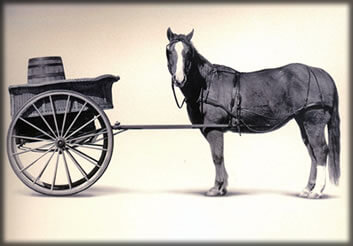
The advent of desktop publishing and self-publishing are welcome developments enabling many people to self-publish their work, but there is a negative side. The negative is that the several stages of editing the text before design are often omitted or, as in these cases, are an afterthought. The design cart is put before the editing horse. The results are evident in the negative comments about some self-published books, for example, on Amazon.
I said earlier that most creatives and graphic designers were happy to collaborate with me to achieve a superior-quality offering; one graphic designer, however, would not do so. Their design was immutable, including the text, notwithstanding that it contained spelling and grammatical errors.
As it was clear that I could not perform my role to a professional standard, I thanked the creative for their enquiry and declined the invitation to work with them on their project.
Is it cheating in academic proofreading to improve AI-created text so that it is undetectable?
The following two case studies show the fine line between mentoring the author and cheating.
This ethical question arose twice recently. Both cases involved postgraduate students who had created academic writing using ChatGPT and openly admitted it.
Student #1. This student was a doctoral student. Before submitting a 2,200-word section of his thesis to his supervisor, the student ran it through Turnitin, which is widely used in colleges and schools to detect plagiarism and content created by AI. Several sections of the text were flagged as likely being created by AI.
The student wanted those parts of the text to be edited and rewritten, without loss of meaning, so that it would pass the Turnitin test.
Student #2. This student was also a doctoral student. He intended to have his 37,500-word article published in a peer-reviewed journal. It, too, had been created using ChatGPT and had been submitted to his professor for review. A number of amendments were suggested as at least some of the AI-generated content had been detected.
The student wanted his entire article edited and rewritten where necessary so that any AI-generated content would not be detected.
What do the universities say?
Most universities actively encourage students to ensure their papers are edited and proofread and have a proofreading policy or guidelines that must be followed. As an example, here’s what the University of Warwick said:
“Third-party academic proofreaders are not expected to actively amend existing, or create new, content in draft work; instead, they should support the student by identifying errors and or making suggestions relating to – but not creating – content. The University considers the role of the proofreader to be more akin to that of a mentor rather than a content producer or editor of the work.”
The difference between ethical academic proofreading and cheating
Ethical proofreading involves the following:
Highlighting areas of the discussion that may require fact-checking
Commenting on any arguments that do not make sense in the context of the rest of the paper
Correcting spelling, grammatical, and punctuation errors
Pointing out any material or language that isn’t appropriate, for instance, the use of slang or derogatory terms
Identifying areas where the writing is unclear
Highlighting citation errors or a lack of appropriate citation
Ensuring the paper is formatted in a professional and polished manner
Pointing out problems, but not solving them
Essay editing or proofreading is cheating if the editor does any of the following:
Performs any type of research on behalf of the student
Rewrites sections of text because they are factually incorrect
Answers the essay prompt on the student’s behalf
Significantly alters the content or meaning of the text
Changes the main ideas or arguments
Adds citations and references
Composes an analysis for the student
Significantly restructures the whole essay
How did I approach each case, and what did I do?
Student #1. A careful reading of the text showed that the words used and the language style could be altered without altering the author’s meaning and without restructuring the text.
As it was a case of eliminating filler words, replacing academese with plain English, and using an active voice wherever the context allowed, I concluded that it was ethical for me to undertake the work requested.
The result was that my Plagium check showed that the content had a 0% probability of being plagiarised. I also ran the text through an online AI checker that reported the text to have been human-created.
Student #2. The draft of the 37,500-word article was presented to me with the intention that I should resolve the professor’s comments and suggested alterations, and then rewrite the document as required using a style and language that would pass a Turnitin test.
As is common in articles submitted for publication, there was a declaration that the essay was entirely the author’s work.
Applying the above criteria, it was obvious that I would have to:
Significantly alter the content; and
Significantly restructure the essay.
These actions would assist academic fraud. Furthermore, if I did the above, the essay would not be entirely the author’s work, and he could not, therefore, declare that it was.
This article is aimed at sellers, but it contains some things that buyers should also be aware of.
1. Casting the net wide
The first thing to be aware of as a service provider is that it is common for a buyer, particularly on freelance platforms such as Fiverr or Upwork, to cast their net wide and will usually choose the first offer they receive. Not all buyers say whether they have invited multiple service providers to do the job. So, as a seller, it would be prudent to proceed on the assumption that they have.
There is a variation on this, which again is not often disclosed to the seller at the outset. That is, the buyer wants a backup in case the preferred service provider is unable to do the job for some reason.
This may make sense to the buyer. However, from the service provider’s perspective, there is uncertainty about whether they have secured the work. Because of the uncertainty, service providers are likely to accept a firm offer from another buyer to do work. If that happens, the first buyer could find themselves in a situation in which multiple service providers withdraw their offers.
An example
Something along these lines happened to me earlier today. I was asked to work on two urgent documents. The timescale was short. I responded with an offer within ten minutes of receiving the request. A short time afterwards, I was informed that another service provider had been awarded the job the previous day. The previous day! Naturally, I withdrew my offer. Later, the original service provider dropped out, and the buyer wanted to place an order with me, but by that time, I had accepted another brief and was working on it. The buyer was not pleased that he was not at the head of the queue, and not even in second place – caveat emptor!
Helping themselves
Buyers could help themselves by informing prospective service providers that they had invited other service providers to bid for the work. It is unscrupulous to invite bids for work after it had already been given to someone else. If that deal falls through for whatever reason, buyers should be honest and say the work had been given to another service provider, but they had to drop out. Openness helps to build trust and confidence between the parties.
2. Unscrupulous buyers
There are unscrupulous buyers. Although such people form a tiny minority of buyers, as a service provider, you will come across such people at some time in your career. These are people for whom you have done a good job and met their requirements in the provision of your service, but who nevertheless reject your work for some vague and spurious reason. They hide behind the dispute resolution procedure, knowing the platform will take their side and that they get to keep the fruits of their labour without having to pay for it.
I try to protect myself by making it clear to prospective buyers that the offer I made to them is subject to my terms and conditions and that no copyright or other intellectual property right in my work passes to the buyer until I have received payment in full.
I also make a Google search against sections of the work I created to see if the unscrupulous buyer has used my copyrighted work. If they have, I always make a copyright claim. Fortunately, I have rarely had to do this, but it was effective when I did.
I block every buyer who behaves in this way.
Conclusion
Open, honest communication between the buyer and service provider helps build trust and confidence, leading to a successful collaboration that benefits both parties.
My experience with other platforms is that there are two main reasons why briefs are declined. To help buyers and service providers achieve the best outcome for a brief, I have examined these reasons in this article. It is not uncommon for me to reject a brief for both reasons.
1. The brief is unclear
I have seen many instances where a brief has been posted that insufficiently describes what the service provider is being asked to do. This is often due to the buyer not understanding what work they want done or them communicating it poorly. If the brief does not adequately describe what is wanted, how can the service provider meet the brief?
There are two possible outcomes:
The brief is accepted by a service provider who is willing to take the risks inherent in the job; or
The service provider seeks more information.
The risk inherent in the first possible outcome is that the interpretation of the brief by the service provider does not meet the buyer’s expectations notwithstanding that they were inadequately formulated and or poorly communicated. Both parties lose in such a situation, but the bigger loser is the service provider whose reputation may be injured and they might not receive payment.
Asking the buyer for clarification of the brief is the better course of action.
If you are a buyer, try to describe the brief is as much detail as possible. If you receive a request for more information from the service provider, you should answer their questions as best you can.
I decline the brief if the buyer cannot describe the work they want to be done with sufficient clarity, or if they do not reply to my request for more information.
2. The buyer’s expectations are unrealistic
There are three areas in which the buyer might have unrealistic expectations:
The skill and expertise required to do the job;
The time required to do the job; and
The cost.
In most cases, the buyer is unrealistic in all of these aspects. This finding is backed up by research conducted by Fiverr.
When I come across unrealistic expectations, I communicate with the buyer to politely inform them that they are being unrealistic. Sometimes, this has resulted in the buyer revising their expectations and a successful brief ensued. However, most often the buyer failed to respond, so I declined the brief.
Skill and expertise
A brief I have often seen is for proofreading and verifying the accuracy of a document translated from another language. This requires three levels of expertise:
Fluency in the original language;
Fluency in the language of the translated document; and
Proofreading and editing skills.
What the buyer really wants is a bilingual proofreader, but they have not limited the brief to such service providers.
I have recently seen a brief that required the service provider to not only proofread an academic medical science document, but for them also to verify all of the references to ensure they were correct as well as their proper citation.
I do not accept a brief if I lack the skills required to do the job properly.
Time required to do the job
A simple and straight forward proofreading job of a short document can be completed within a few hours, that is not the case for complex tasks and or where additional services are to be provided. Checking references and citations is laborious and time consuming. Plagiarism and AI checks add to the time to complete the job as well as additional cost.
Not all buyers appreciate how much time will be required to do their job. So, as a service provider, you should tell the buyer how long you think it will take you to complete the job and how much it will cost.
However, many briefs are eleventh hour jobs where the buyer wants the service provider to drop everything and complete their task within a few hours – a day at most. Many buyers use briefs as a way of avoiding paying a premium for extra fast delivery. This is unethical.
If the buyer will not allow sufficient time for me to do the job properly, I decline the brief.
Cost
Buyers who post their job on sites such as Fourerr or Fiverr, for example, often have a misconception that the job will only cost them a handful of dollars as both of these sites started out offering jobs for four and five dollars respectively. This is no longer the case, but the perception will be reflected in the buyer’s budget or the price they are willing to pay as shown against their brief. This is often much less than you would charge for doing the job.
This is the buyer dictating an unrealistic price for the job. It is up to you to accept or reject their price. Instead of rejecting it outright, you could make them a counter offer on your terms and conditions. The buyer then has either to accept your counter offer or reject it.
If I am interested in doing the job, assuming the brief is sufficiently clear, I send the buyer my price and timescale for doing the work on my terms and conditions. They can either accept my offer or they can reject it.
If the buyer will not pay a fair price for me to do the job properly, I decline the brief.
Communication with the buyer
If you get a brief from a buyer that is deficient or unrealistic in any way, contact the buyer to ask for more information or to suggest how their expectations could be better managed instead of rejecting it immediately. There may be some negotiation resulting in an amended brief that both parties are happy with. That would be a positive outcome for both the buyer and the service provider.
Good communication between the buyer and service provider is essential to achieving a successful outcome on the brief.
There are different types of editing, like the layers of an onion, each of which has its own place in the publishing process. This article explains the different editing functions to help you decide what type of editor you need and when you need them.
Editing functions:
Development editing
Line editing
Copy editing
Proofreading
This article will look at each in turn to help you decide whether and when you need that service.
I will look at traditional book publishing, and then self-publishing.
Traditional book publishing:
Congratulations! The manuscript you sent to umpteen publishers has fianally been accepted. The trauma of all those rejection slips has melted away in the euphoria of your book deal.
The publisher has seen potential in your manuscript – potential for them to make money from your book. Now, the work of turning your manuscript into a professionally published book begins. This is a collaborative effort between you and the publishing house that takes time to complete – often a year and a half or more from when you submitted your manuscript.
The development editor:
The publishing house will send your manuscript to a development editor. This may be an in-house employee of the publisher or a freelance development editor. Their job is to look at the big picture of your manuscript:
Is there a plot? Is it coherent? How is it structured?
Who are the characters? Do they have their own voices or are they speaking with the same voice? Are the characters strong enough to merit the position you have given them or do they detract from the story?
Detailed further analysis of the manuscript.
The development editor is not concerned with how the book will be laid out. Nor are they looking for grammatical errors and spelling mistakes. Their job is to ensure your manuscript has a coherent structure, a plot, and realistic characters.
The development editor is likely to suggest revisions to your manuscript for further review by them, and their critique can seem harsh but it is for a purpose – to get your manuscript to a standard suitable for publication. You should expect your manuscript to be subjected to several rounds of review before it is ready for the next stage in the process.
Line editing
Line editing is sometimes the next step after development editing. Line editing looks at how you use language at the sentence and paragraph level to shape your voice and tone. A line editor may make suggestions to help refine your voice and tone. Lline editing is more commonly used in fiction and creative writing than in non-fiction.
Copy editing:
Copy editing has two main functions:
Checking for grammatical and spelling errors, as well as checking obvious facts. A fictitious story I edited was based on the battle of Kursk in the Second World War. The author mistakenly had the wrong victors. A copy editor will also check for consistency, such as words spelt with and without a hyphen, “ize” or “ise”, etc.
Preparing the size and layout of the book for printing. This includes the size and number of pages, where any pictures or illustrations are to go and how the text wraps around them or not as the case may be.
The copy editor will go through the manuscript several times and may suggest revisions to the manuscript.
These are some key questions that a copy editor will consider when editing your manuscript:
Have proper words been chosen to express your ideas? Does it sounds as if you have consulted a list of synonyms provided by your word processing program? If you have, they will spot it.
Have you used an active voice? An active voice is not always appropriate, such as in academic writing, but writing that is too passive does not make for compelling reading.
Is the tone appropriate for your audience?
Have you used too many words? Using unnecessary, frivolous, and filler words can irritate readers. Use as many words as are necessary, but not one more!
Have you used gendered language appropriately?
Have you used artificial intelligence to create some or all of your prose? I recently edited a manuscript created by a well known AI program. The setting was a series of executive meetings. Every character “leaned in slightly” before speaking, and all “paused before continuing”. These devices soon became serious distractions and give away the AI-generated content.
Your manuscript may require one or more redrafts, but it will emerge from this process in a form that is ready to be sent to the printer. Traditionally, this is called a “proof”.
Proofreading:
Proofreading is the final check to correcting errors in writing, such as grammatical, spelling, punctuation and other language mistakes. Detecting these errors before your manuscript is printed is an important process.
These are the key questions the proofreader will consider when proofreading a piece of writing:
Are there any spelling errors? Are spellings consistent? A proofreader will check for consistency, such as words spelt with and without a hyphen, “ize” or “ise”, etc.
Are full stops, commas, colons, semicolons, hyphens, en dashes, em dashes, ellipses, etc., used correctly?
Have words that sound like one another word but have different meanings (homophones), such as there, their and they’re, or your, you’re (I have even seen yaw and yore) been used correctly?
Have quotation marks and apostrophes been used appropriately and consistently?
Are there any double spaces, particularly after full stops? Are there any extra spaces where there should be none?
A proofreader will make several passes through the manuscript, each pass checking for a specific type of error.
Your manuscript may need to be redrafted more than once until it is ready to be printed.
Development editing, line editing, copy editing, and proofreading are sequential stages of text revision that focus on different levels of writing, moving from plot and character development, stylystic flow, and down to final error correction.
Self-Publishing
All of the editing stages described above apply to self-published manuscripts. However, not every author employs an appropriate editor at every stage of the preparation of their manuscript. This could be for reasons of cost, or the author is unaware of the available services and at what stage of manuscript development they are appropriate.
In traditional book publishing, the editorial costs are borne by the publisher. The self-publishing author bears these costs, which is why many of them make economies. The first for the chop is development editing. Copy editing and proofreading are often conflated and described as “proofreading” or “line editing” to which many authors attache insufficient value.
It would be an error to think that eliminating mistakes and inconsistencies in a document is a quick and undemanding job that a friend or family member, or even a computer program, could easily do. Several years ago, Penguin Australia published a cookery book. One recipe called for freshly ground black pepper. Unfortunately corners were cut and an auto spell checker changed “pepper” to “people”. Oops! This error was only spotted after publication. All 7,000 copies were recalled and pulped!
A professional editor is a far more accomplished proofreader than your typical friend or family member and any computer program you may use as a writing aid. Both editing and proofreading take time to do as we have to be meticulous. We may have to go through your prose several times. Friends or family members are often unable to devote the time required to do the job in the way that a professional editor does.
Let me give you two examples:
In the first example, I recently had the privileged of being commissioned to proofread the typescript of a student text book, the main body of which was some 85,000 words. The author assured me that he had read through the typescript several times as had two other people. He thought that having his typescript professionally proofread was just a formality; consequently, he placed little value on it. He was more than a little red-faced when I found several hundred grammatical and spelling errors that he and his two friends had missed.
In the second example, I was commissioned by a professional person to proofread an important business report. The final draft of which had been reviewed by no fewer than five other professionals that had helped draft the document. Because of the importance of the document, the lead author commissioned me to proofread it. I found an embarrassingly large numbers of errors. My fee was considered to be money well spent by the lead author.
Both of these are examples of scotomisation, which is the psychological tendency in people to see what they want to see and not see what is written. As a proofreader, I am trained to see what the author has written.
A professional editor understands the conventions of English writing and the nuances of the language, and are familiar with the most commonly used style guides and citation systems. They are trained to be methodical; their experience enables them to identify and eliminate the common errors that often occur in all forms of writing from novels to academic papers. In addition, they can also identify inconsistent terminology, incorrect spelling, and formatting errors in your document.
Epilogue
Sadly, there are many authors that, having invested a great deal of time and emotional energy into the creation of their prose, place insufficient value on having it properly edited and proofread. Hopefully, you are not among their number.







 them is subject to my terms and conditions and that no copyright or other intellectual property right in my work passes to the buyer until I have received payment in full.